What to Look for When Choosing a Breast Pump
- Aug 14, 2026

Breast Pump Lingo
I often encounter moms who feel overwhelmed and confused when it comes to choosing a breast pump. The sheer number of pumps on the market can feel daunting, especially if you’ve never pumped before. The features, the lingo, the cost…it can feel rather intimidating. That’s exactly why we’ve curated this guide to help you know exactly what you should look for when choosing your breast pump. Step one: understanding common breast pump terms.
Flange/Breastshield - funnel-shaped part of the breast pump that sits directly on the nipple and breast tissue.
Flange Insert - silicone piece that fits inside the flange/breastshield and reduces the diameter of the tunnel.
Diaphragm - barrier that prevents milk from backing up into the pump tubing and motor. The inclusion of a diaphragm provides a closed, hygienic system.
Duckbill Valve - duckbill-shaped silicone valve that attaches to the pump assembly to create suction.
Tubing - connects the flange/breastshield assembly to the pump motor; not all pumps have tubing.
Collection Containers - containers that attach to the flange/breastshield that collect milk as it is expressed.
Vacuum - suction used to pull the nipple into the flange tunnel; measured in mmHg (millimeters of mercury).
Cycle - how many times the pump pulls the nipple into the flange tunnel (CPM = cycles per minute).
Massage Mode - faster cycle speed with lower suction that triggers letdown.
Expression Mode - slower cycle speed with stronger suction to extract milk.
The Difference Between Primary and Secondary Pumps
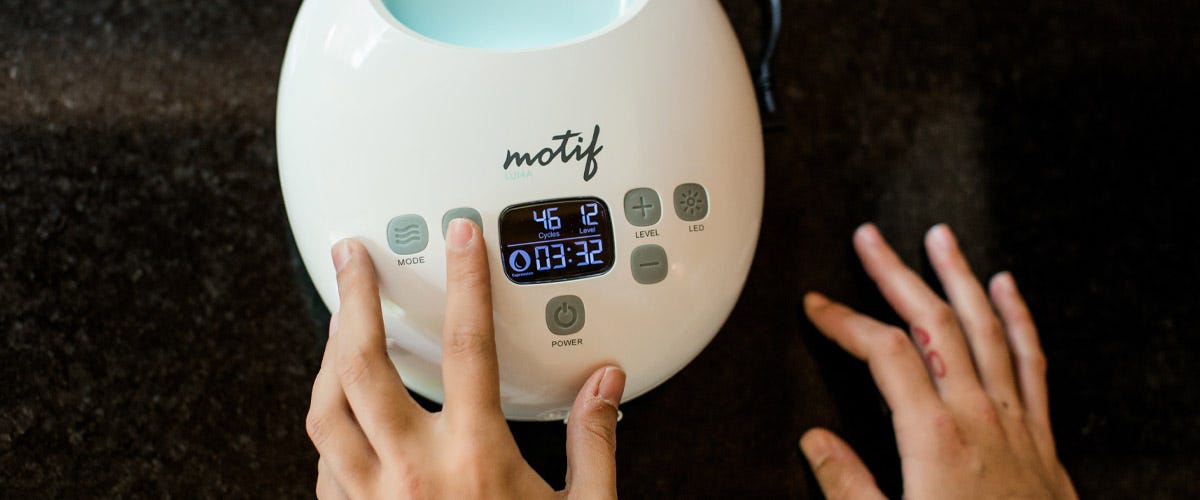
I like to think of primary breast pumps as the “workhorses” of the pumping world. They’re strong, built for frequent use, and meant to build and maintain an abundant milk supply. They are table-top pumps that utilize traditional flanges rather than hands-free cups. The best primary pumps give you the ability to adjust the vacuum level independently of the cycle speed. The Motif Luna is an ideal option for a primary pump.
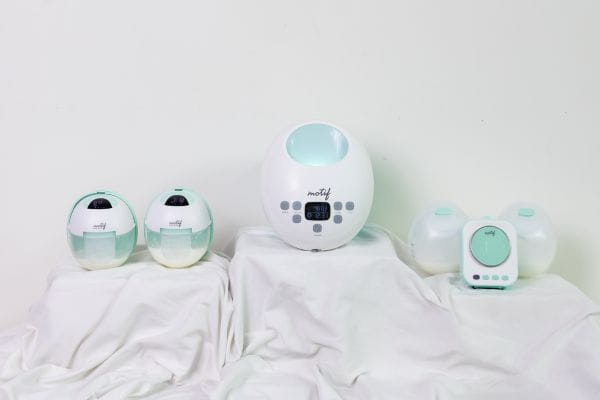
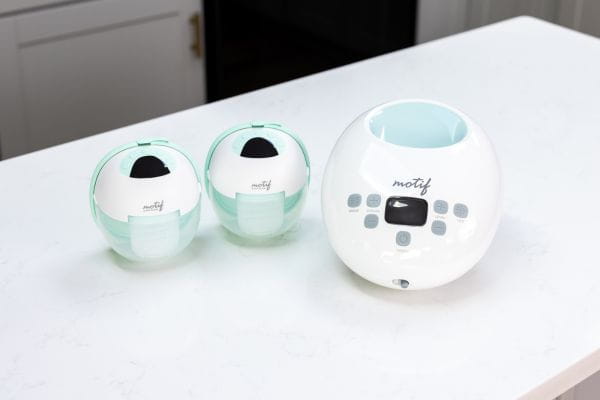
Secondary breast pumps include wearable and portable style pumps. They are typically less powerful and efficient than primary pumps due to their small size. While secondary pumps are typically not recommended as a replacement for a primary pump, they make a wonderful addition to your pumping lineup. Wearable pump design has come a long way in the past few years, and the Motif Aura Glow has emerged as a frontrunner when it comes to comfort and effectiveness. It’s at the top of the list for wearable pump options if you’re looking for a pump that allows you to pump anywhere while still delivering great performance.
Breast Pump Features
When it comes to evaluating features and specifications for different types of breast pumps, take some time to think through how you will be using your pump. Will you need to pump while “on the go” or while interacting with others? In that case, a wearable is likely a great option for you. Will you be focusing on building and maintaining an abundant milk supply while you are separated from your baby or as an exclusive pumper? If so, you’ll get the best bang for your buck from a primary pump.
Some features will be more important to you than others, so be sure to consider which ones you’ll likely be using on a daily basis versus those that are less practical. Resist the temptation to choose a pump based on its aesthetic appearance or whether or not it comes with a cute bag. Bags and accessories can be added later, but the main focus should be on how well the pump performs.
Common features to consider
The night-light feature can also be used to help center your nipple for correct placement while you're on-the-go pumping.
Timer - helps you keep track of how long you’ve been pumping without having to watch the clock.
Pre-Programmed Modes - take the guesswork out of which settings to use
Availability of Replacement Parts - most families have insurance coverage for replacement pump parts, but not all pumps offer parts that meet insurance coverage standards (All Motif pumps offer replacement pump part kits that are insurance eligible).
Powerful Motor - no matter which type of pump you choose, be sure the motor provides at least 250 mmHg of suction.
Wide Range of Flange Sizes - most women need sizes that are much smaller than 24 mm, so make sure your pump is compatible with your individual flange size.
Lightweight - lugging around a heavy pump will make you less likely to pull it out for frequent sessions.
Rechargeable Battery - pumps that are rechargeable battery-operated allow you to pump almost anywhere.
Auto Shut-Off - some pumps feature a 30-minute auto shut-off just in case you forget to end your session or your pump gets turned on in your pump bag.
Getting Your Pump Through Insurance
For many moms, insurance covers their breast pump at 100%! When determining which pump to get through insurance, don’t be afraid to shop around with different DME’s (Durable Medical Equipment providers) as each one may offer a different selection. If you’re planning to get a primary pump and a portable or wearable, I recommend using your insurance benefit for the more expensive option and then paying out of pocket for the other pump or adding it to your baby shower registry. Many insurance plans also cover breastmilk storage bags and replacement pump parts, so be sure to check your coverage before purchasing these items out of pocket. The Motif Medical Insurance Lookup Tool makes it easy to get the process started.
Motif Medical offers a complete lineup of high quality breast pumps to fit a variety of needs. With insurance-elligible replacement parts, accessories like hands-free Collection Cups, and top-tier customer service Motif Medical is your go-to pumping support.
About The Author

Jacque Ordner is a mom of four sons and IBCLC in the heart of the Midwest in Illinois. Her love of lactation support began over a decade ago when she was working as a registered nurse. She specializes in adoptive lactation, breastfeeding after c-section, and pumping.
Information provided in blogs should not be used as a substitute for medical care or consultation.
Information provided in blogs should not be used as a substitute for medical care or consultation.