Pumping With a Wearable: Do’s and Don’ts You Need To Know
-
 By
Jacque Ordner - Motif Medical
By
Jacque Ordner - Motif Medical
- Mar 18, 2026

Pumping With a Wearable
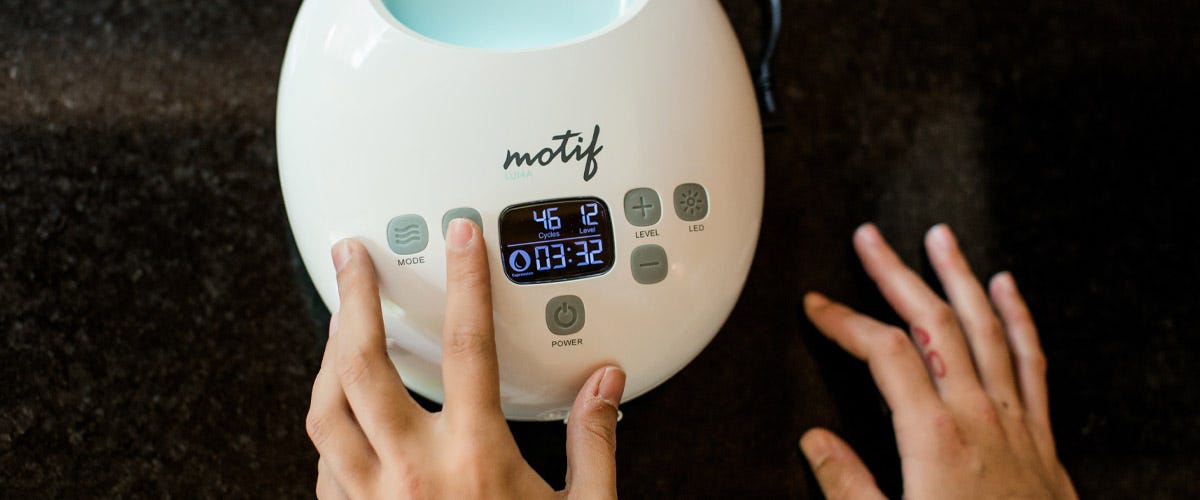
Wearable breast pumps have completely changed the pumping experience for busy parents—offering freedom, mobility, and the ability to pump discreetly while juggling daily life. But like any tool, getting the best results comes down to technique, fit, and understanding how your pump works. Whether you're preparing for your return to work, pumping on the go, or simply exploring hands‑free options, a little guidance can make a big difference in comfort and output.
To help you get the most out of your wearable pump, we break down the essential Do’s and Don’ts every breastfeeding mom should know. These tips support milk supply, protect your pump from damage, and help you feel confident using your wearable—wherever your day takes you.
The Do’s of Pumping With a Wearable
- Do check your flange size
Focus on comfort and output, using measurements as a guide—not a hard and fast rule. Pumping shouldn’t hurt. If you are struggling to find a comfortable size, reach out to an IBCLC (International Board Certified Lactation Consultant) who is experienced in flange sizing.
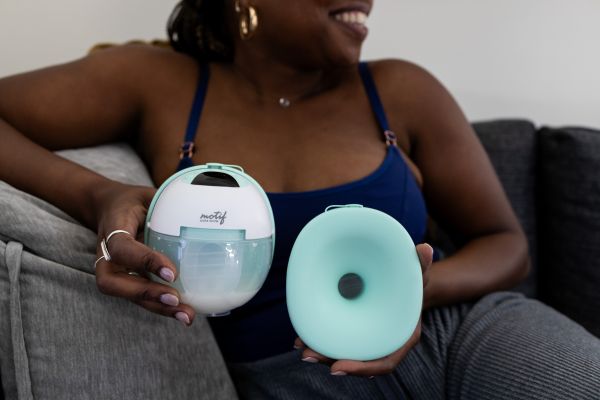
- Do make sure you have the pump positioned correctly
Center your nipple carefully; using a mirror can help. You can lean forward and drop your nipple into the tunnel, or bring the pump bottom‑first to the breast and then lift it into place.
-
Do a trial run about 2 weeks before going back to work or pumping in public
This gives you time to get comfortable with your pump before you rely on it in real‑time situations.
-
Do have a primary pump
Wearables are great for on‑the‑go use as a secondary pump, but you should still have a traditional tabletop pump as your primary pump for maintaining supply – especially if you are exclusively pumping.
-
Do sit back and relax
Most wearables have an automatic shut‑off, which is a helpful safety feature.
The Don’ts of Pumping With a Wearable
-
Don’t bend over too far or lie down
Even with a stopper, milk can leak out and damage the pump motor if you bend too far or recline. So, skip leaning over the dishwasher—and definitely no downward dogs, yogis!
-
Don’t leave your bra too loose or too tight
Your bra should be snug enough to hold the pump securely, but not so tight that it compresses breast tissue. Some pumps include straps to help with adjustments.
-
Don’t assume your flange size is the same for your wearable and primary pump
If pumping isn’t comfortable with your usual size, try different options until you find the best fit.
-
Don’t pour your milk until you’ve removed the pump motor
Always remove the motor first to avoid damaging it.
-
Don’t skip pump sessions
Use your primary pump whenever possible, but rely on your wearable when you need flexibility.
You’re doing an amazing job navigating your pumping journey, and tools like wearables can make it feel a little more manageable. With the right fit, the right pump, and a little practice, you’ll find the rhythm that works best for you. We’re here cheering you on every step of the way as you feed your baby with confidence and care.

Storkpump
Storkpump by AdaptHealth and Motif Medical are committed to assisting families throughout their breastfeeding experience to equip parents with evidence-based resources, innovative breastfeeding products, and personal support to achieve success.
Order or learn more about the Motif Aura GLOW Wearable Breast Pump fully covered through insurance here.
Contributors
Melissa Portunato MA, IBCLC with Storkpump by AdaptHealth and Jacque Ordner BSN, RN, IBCLC with Motif Medical
Sources:
Kellams, A., Harrel, C., Omage, S., Gregory, C., & Rosen‑Carole, C. (2017). ABM Clinical Protocol #3: Supplementary feedings in the healthy term breastfed neonate (Revised 2017). Breastfeeding Medicine, 12(3), 188–198. https://www.bfmed.org/protocols
Anders, L. A., Mesite Frem, J., & McCoy, T. P. (2024). Flange size matters: A comparative pilot study of the Flange FITS™ guide versus traditional sizing methods. Journal of Human Lactation, 1–11. https://doi.org/10.1177/08903344241296036
About The Author

Jacque Ordner is a mom of four sons and IBCLC in the heart of the Midwest in Illinois. Her love of lactation support began over a decade ago when she was working as a registered nurse. She specializes in adoptive lactation, breastfeeding after c-section, and pumping.
Information provided in blogs should not be used as a substitute for medical care or consultation.
Information provided in blogs should not be used as a substitute for medical care or consultation.