How to Travel With Breast Milk
-
 By
Jacque Ordner - Motif Medical
- Jun 1, 2023
Updated on 11/13/2026

Traveling with breast milk doesn’t have to be a hassle. Whether you are taking a road trip, flying across the country, or traveling without your baby, planning how to transport your milk is imperative to keeping your supply safe. This blog covers everything from navigating the latest airport security rules to packing essentials, ensuring you can travel with confidence.
TSA Breast Milk Policy and Rules
One of the most common questions new moms have before a trip is whether they can bring breast milk on a plane. The short answer is yes. According to the Transportation Security Administration (TSA), breast milk is treated differently than standard liquids.
The 3-1-1 Liquids Rule Exemption
Formula, breast milk, and juice are considered medically necessary liquids. This means you can bring them in carry-on baggage in quantities greater than 3.4 ounces (100 milliliters), exempting them from the standard 3-1-1 Liquids Rule. These items don't need to fit in a quart-sized bag, and you don't need to travel with your child to bring breast milk aboard a flight.
Flying With Frozen Breast Milk
If you plan on flying with frozen breast milk, you'll be happy to know that solid milk and frozen ice packs are often easier for security agents to screen visually. Ice packs, freezer packs, frozen gel packs, and other cooling accessories are permitted in carry-ons. Just keep in mind that if these cooling accessories are partially frozen or slushy at the security checkpoint, they may be subject to additional screening.
Navigating TSA Screenings
-
Notify a TSA agent: Inform the TSA agent at the start of the screening process that you are carrying breast milk.
-
Separate your items: Remove your stored breast milk, cooler bag, and pump parts from your other carry-on baggage so TSA can screen them separately.
-
Understand X-Ray procedures: TSA X-ray machines do not adversely affect food or medicines. However, if you prefer that your breast milk not be X-rayed, inform the TSA officer. TSA will take additional steps to clear the liquid, and you will undergo alternative screening procedures.
-
Seek assistance if needed: Travelers requiring special accommodations can contact TSA Cares by phone at (855) 787-2227 or via the federal relay at 711.
How to Pump and Breastfeed While Traveling
Store breast milk in small, usable amounts (2-4 ounce portions work well) to minimize waste, allow even temperature regulation, and cool faster.
The Cooler Method
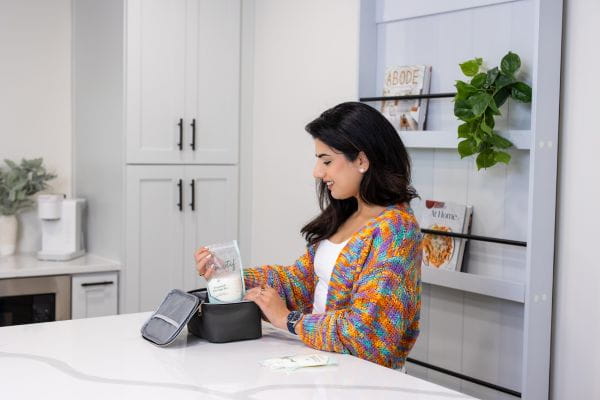
Pack your milk in a high-quality cooler bag. Use solid gel packs, which TSA prefers over loose ice. Bring along a few zip-top bags that you can fill with ice if your gel packs melt during travel. You can get ice from the airport food court or from flight attendants once you’re on board. CDC guidelines state that breast milk can be safely stored for up to 24 hours in a cooler bag with cold packs.
The Milk Chiller Method
While the preferred method of traveling with breast milk is a cooler bag, many mothers use milk chillers to streamline the process. With this process, milk from multiple pumping sessions is combined into a single insulated container that is designed to keep it chilled for several hours. It’s important to note that marketing claims about the number of hours a milk chiller can store breast milk at a safe temperature are not typically independently verified. The CDC and the Academy of Breastfeeding Medicine both warn against mixing warm milk with previously chilled milk, as it could rewarm the older milk. However, there is no published evidence demonstrating that mixing warm milk and cool milk is unsafe. To learn more about safely combining milk, read our guide on The Pitcher Method
Breast Milk Storage Guidelines
Freshly expressed milk can safely sit at room temperature for up to 4 hours per the CDC guidelines (up to 8 hours according to the Academy of Breastfeeding Medicine). When traveling, rely on coolers or mini-fridges to extend that life. If you’re staying in a hotel, call ahead to ensure you have access to a freezer, a mini-fridge, or a medical fridge. Frozen breast milk that has started to thaw but still has ice crystals can be refrozen. Fully thawed breast milk should not be refrozen.
Cleaning Pump Parts on the Go
The CDC recommends washing pump parts in hot, soapy water. If that isn't possible in a busy airport, use sanitizing wipes or sprays made specifically for breast pumps. If you can't wash parts immediately, the fridge hack (storing used parts in a sealed bag in the fridge or cooler between pumps) can temporarily prevent bacterial growth, but the safest method is to wash with hot, soapy water after every use.
How to Prepare for Different Methods of Traveling
Pumping and Breastfeeding on a Plane
If your baby is flying with you, nursing during takeoff and landing encourages swallowing, which helps relieve painful ear pressure caused by altitude changes. Remember, it is legal to breastfeed and use a breast pump on domestic flights or in U.S. airports with or without a cover.
Airport Lactation Rooms
The Friendly Airports for Mothers Improvement Act requires airports to provide a quiet, clean, and discreet area for pumping or breastfeeding. Many airports now feature dedicated Mamava lactation pods or designated nursery spaces.
Traveling with Breast Milk by Car
When taking a road trip, plan your stops around your baby's typical feeding intervals. Babies often sleep longer in moving vehicles, but it is important to stick to a routine. Never feed a baby a bottle while they are buckled into a moving car seat, as this poses a serious choking and aspiration hazard. For pumping moms, use a battery-operated pump so you can maintain your milk removal schedule from the passenger seat without hunting for a wall outlet.
Traveling Without Your Nursing Baby
Leaving your baby behind for a work trip or getaway? These tips will help you maintain your supply and transport your milk safely.
Stockpiling Milk Before You Leave
Begin pumping extra ounces a few weeks before your trip to build a freezer stash. This ensures your caregiver has plenty of milk while you are away, taking the pressure off your travel days. One of the best ways to start a freezer stash is to pump for 10 minutes after your first morning nursing session. This works well because prolactin levels peak during early morning hours, so you may have a bit of extra milk at this time.
Protect Your Milk Supply
Be sure to remove milk frequently while separated from your baby. A good guideline is to pump for 15-20 minutes at times when your baby would typically be nursing. Keep in mind that frequent milk removal is much more protective of milk supply than longer pumping sessions performed less frequently.
Shipping Breast Milk Home
If you will be away for an extended period and don't have the luggage space for a massive cooler, consider an alternative shipping service like Milk Stork. These services use dry ice to safely transport your pumped milk back home while you are still on the road.
Breast Milk Travel Essentials Checklist
Ensure you have these items packed in an accessible bag before you head out:
-
Breast Milk Storage Bags: Motif’s leak-proof, BPA-free bags are perfect for travel. Don't forget to label them with the date!
-
Permanent Marker: For on-the-go labeling.
-
High-Quality Cooler & Ice Packs: An insulated cooler paired with solid gel packs.
-
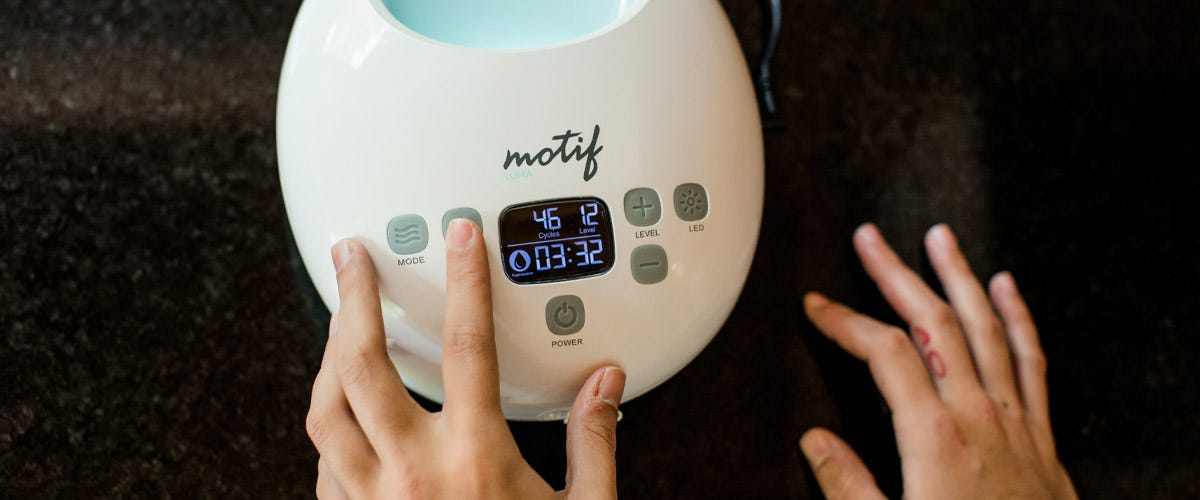
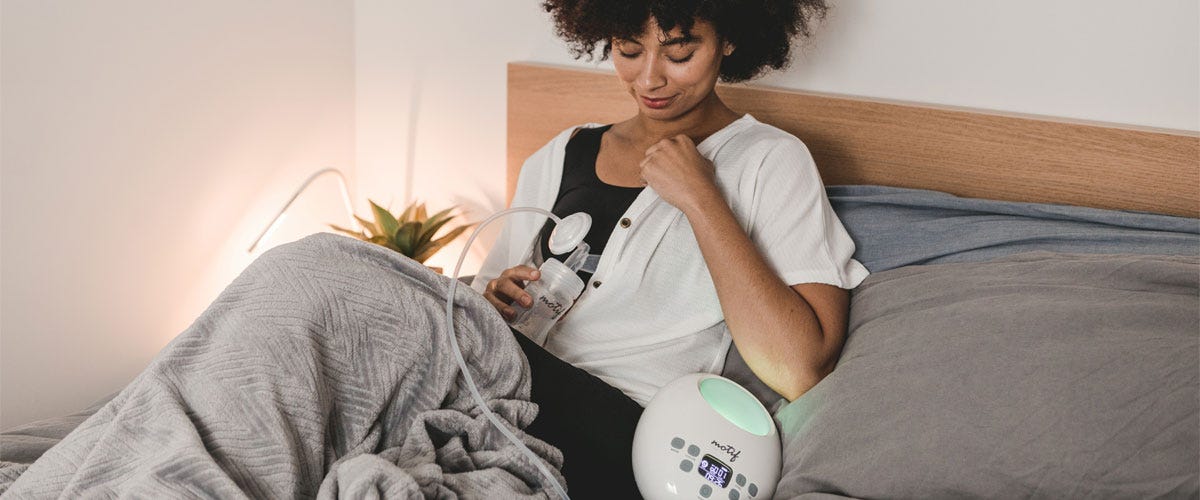
The Right Pump: A portable or wearable pump makes traveling significantly easier. The Motif Luna is a powerful yet lightweight choice with a 4-hour battery life. For a completely hands-free experience, the Motif Aura Glow fits discreetly in your bra.
-
Breast Pump Bag: A dedicated breast pump bag for your pump and accessories. Keep in mind that breast pumps are medical devices and must not be charged for or included in the weight of checked bags.
“You want to enjoy your traveling experience, so packing anything you can to avoid making breastfeeding a battle while flying or driving will be useful. “- Jacque Ordner, BSN, RN, IBCLC

Motif Aura Glow Wearable Breast Pump
The Motif Aura Glow, our newest wearable breast pump designed for convenience and comfort! Glow with a built-in nightlight: Shine a spotlight on your milk output with the collection container's built-in nightlight, making it easy to monitor at any time, day or night.
The Motif Aura Glow comes with everything you need, including a nipple ruler, bra strap adjusters, cleaning brush, 24 mm breast shields with 15 mm, 17 mm, 19 mm and 21 mm inserts for the perfect fit.
Gear Up for Your Next Trip with Motif
Traveling as a pumping mom is a labor of love, but having the right tools in your bag makes all the difference. Before you pack, explore our full line of travel-ready breast pumps, leak-proof milk storage bags, and insulated cooler backpacks designed to keep your hard work safe from takeoff to touchdown.
About The Author

Jacque Ordner is a mom of four sons and IBCLC in the heart of the Midwest in Illinois. Her love of lactation support began over a decade ago when she was working as a registered nurse. She specializes in adoptive lactation, breastfeeding after c-section, and pumping.
Information provided in blogs should not be used as a substitute for medical care or consultation.
Information provided in blogs should not be used as a substitute for medical care or consultation.